
“WHEN FAITH FALTERS”
(Matthew 26:57–75; Mark 14:53–72; Luke 22:54–65; John 18:13–27)
And Peter remembered the saying of Jesus, ‘Before the rooster crows, you will deny me three times.’ And he went out and wept bitterly.” — Matthew 26:75, ESV
Failure has a sound. For Peter, it was the crow of a rooster cutting through the cold dawn. For anyone who’s ever promised God, “I’ll never do that again,” only to fall short, that sound is painfully familiar. All of us have been so sure of our own strength that we have made bold statements we couldn’t back up. Our strength is His grace, not our own resolve. Peter’s failure of faith, his repentance and restoration, and his Spirit-empowered boldness before the same Sanhedrin that convicted Jesus, show us the path from failure to victory. Don’t let temporary shortcomings keep you from eternal victories!
Note: All four Gospels recount Jesus’ trial before the Sanhedrin, the Jewish ruling council composed of 71 elders—chief priests, scribes, and lay leaders—serving as both supreme court and religious authority. They gathered hastily, breaking their own laws to condemn Jesus in the middle of the night. Their verdict: guilty of blasphemy for claiming to be the Son of God (Matthew 26:65).
While Jesus stood before the Sanhedrin’s corrupt judgment, Peter stood before another kind of trial—one of fear and self-preservation.
- Matthew and Mark record three escalating denials, each one more emphatic, until Peter curses and swears he doesn’t know Jesus.
- Luke adds a detail that pierces the soul: “The Lord turned and looked at Peter” (Luke 22:61).
- John reveals how the denials occurred in the courtyard of the high priest, near the fire where Peter warmed himself, a chilling image of comfort in compromise.
In one night, Peter moved from confession—“You are the Christ, the Son of the living God” (Matthew 16:16)—to denial—“I do not know Him.”
Peter’s denial is not a side note—it’s central to the crucifixion narrative.
- It exposes the condition of all humanity. The Sanhedrin’s corruption shows institutional sin; Peter’s denial shows personal sin. Both are part of what sent Jesus to the cross.
- It fulfills prophecy. Jesus had predicted Peter’s fall not to shame him but to prove His foreknowledge and sovereignty even over failure (Luke 22:31–34).
- It magnifies grace. When Jesus later restores Peter by the Sea of Galilee (John 21:15–19), it confirms that failure does not disqualify a disciple—it humbles him for greater purpose.
- It anchors redemption. The cross wasn’t just to forgive what others did to Jesus; it was to forgive what His followers did to Him. Peter’s denial reminds us that Jesus bore not only the sins of His enemies but also the weaknesses of His friends.
After Pentecost, Peter’s boldness before the same Sanhedrin (Acts 4:8–13) becomes the ultimate reversal. The man who once cowered now declares, “There is salvation in no one else.” The rooster’s cry had turned into a trumpet of courage. The grace that restored him now propelled him.
Practical Application:
- Don’t let failure define you. Let it refine you.
- Stay close to Jesus even when you don’t understand His plan. Distance fuels denial.
- Remember that repentance opens the door to restoration. Peter’s tears were not defeat—they were the beginning of healing.
- Be ready to testify. The same mouth that denied Christ became a voice that reached thousands.
Reflection Questions:
- In what ways have I denied Christ—by silence, fear, or compromise?
- How has God used failure to deepen my faith and dependence on Him?
- What does Peter’s restoration teach me about God’s purpose for my life after regret?
Closing Prayer:
Lord Jesus, You stood silent before Your accusers while I have too often denied You with my words and actions. Thank You that Your mercy is greater than my weakness. Like Peter, turn my sorrow into strength. Restore my confidence not in myself but in Your grace. May my past failure become a future testimony of Your faithfulness. Amen.
About our Author
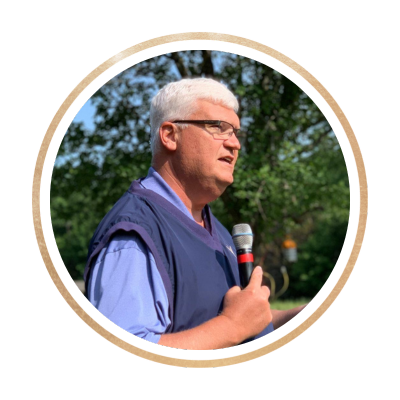
Pastor James M. Armpriester, Jr. worked as a molecular biologist at Procter & Gamble for ten years before becoming a pastor. With over thirty years of experience in ministry, he has been heavily involved in church planting and church health. He has served as a district director in Ohio and North Texas and has been a national leader in curriculum development, coaching, and consulting for church planting and revitalization. Pastor Jim has been the lead pastor of several churches, including New Hope in Cincinnati, Ohio, First Assembly of God in Niagara Falls, NY, and Transformation Life Church, which has multiple campuses in New Jersey.
READ MORE
August 29 – Reading 241
AUGUST 29 - Reading 241by Chris Rainey | August 29“A BUYER'S MARKET?”(2 Kings 25:1-7; 2 Chron 36:15-21; Jeremiah 52:4-27; Jeremiah 32:1-44) Yet you, O Lord God, have said to me, “Buy the field for money and get witnesses”—though the city is given into the hands of the...
August 28 – Reading 240
AUGUST 28 - Reading 240by Chris Rainey | August 28“JEREMIAH: THE NOT-NICE PROPHET”( Jeremiah 21:1-23:40) “I did not send the prophets, yet they ran; I did not speak to them, yet they prophesied. But if they had stood in my council, then they would have proclaimed my...
August 27 – Reading 239
AUGUST 27 - Reading 239by Chris Rainey | August 27“A GREAT LOSS”(Ezekiel 24:2–25:17; Jeremiah 37:1–38:28) The word of the Lord came to me: “Son of man, behold, I am about to take the delight of your eyes away from you at a stroke; yet you shall not mourn or weep, nor...